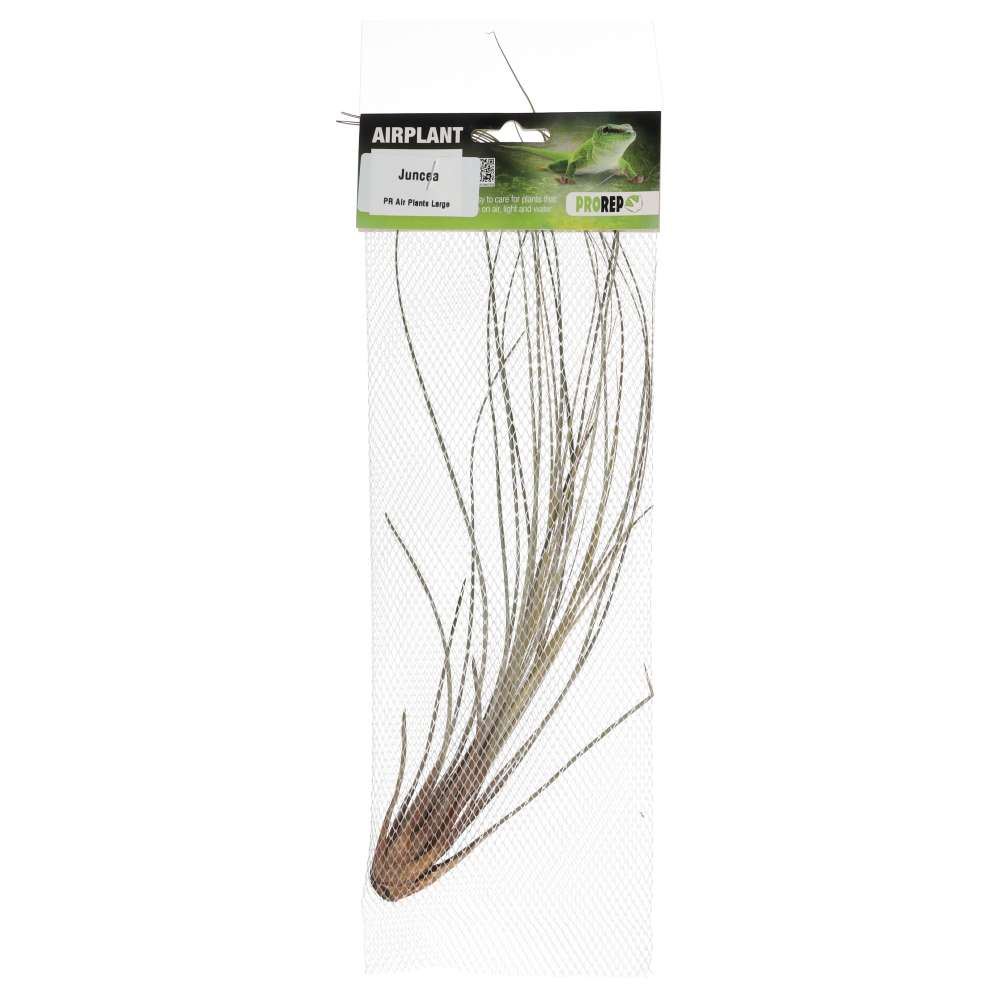
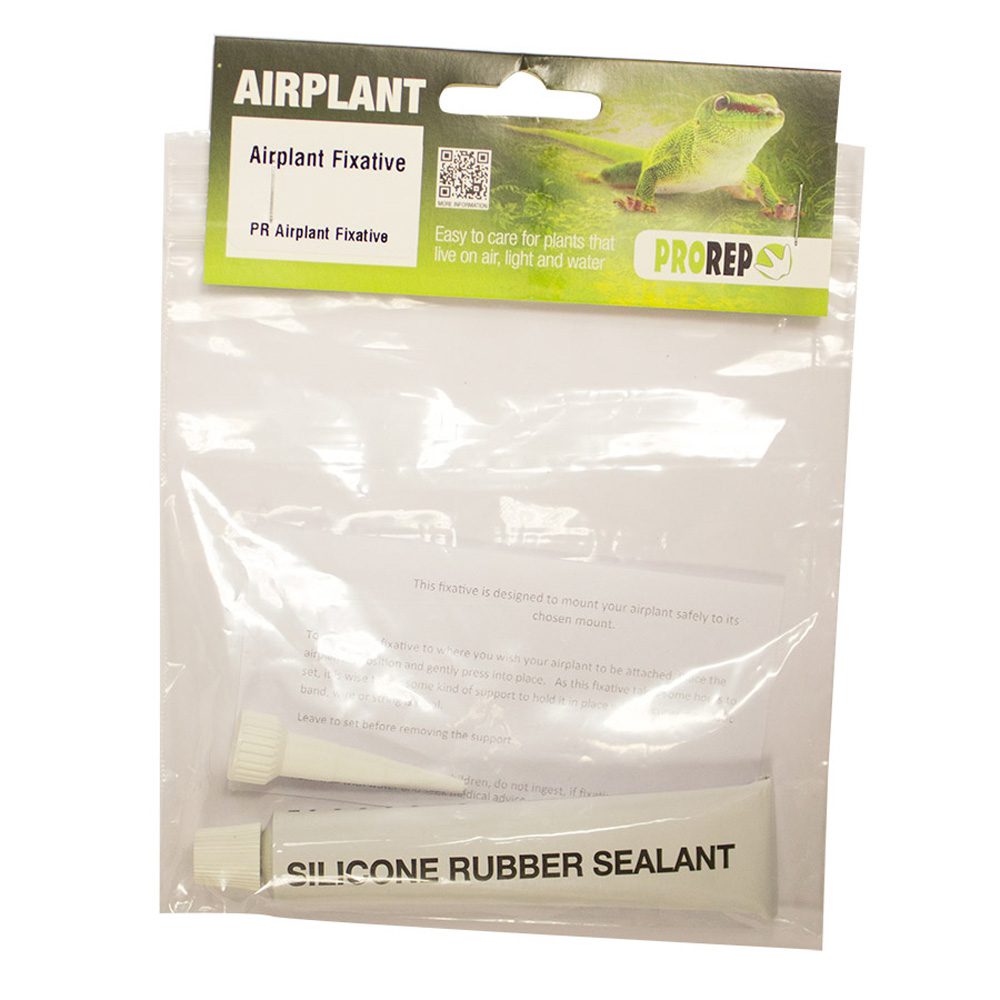
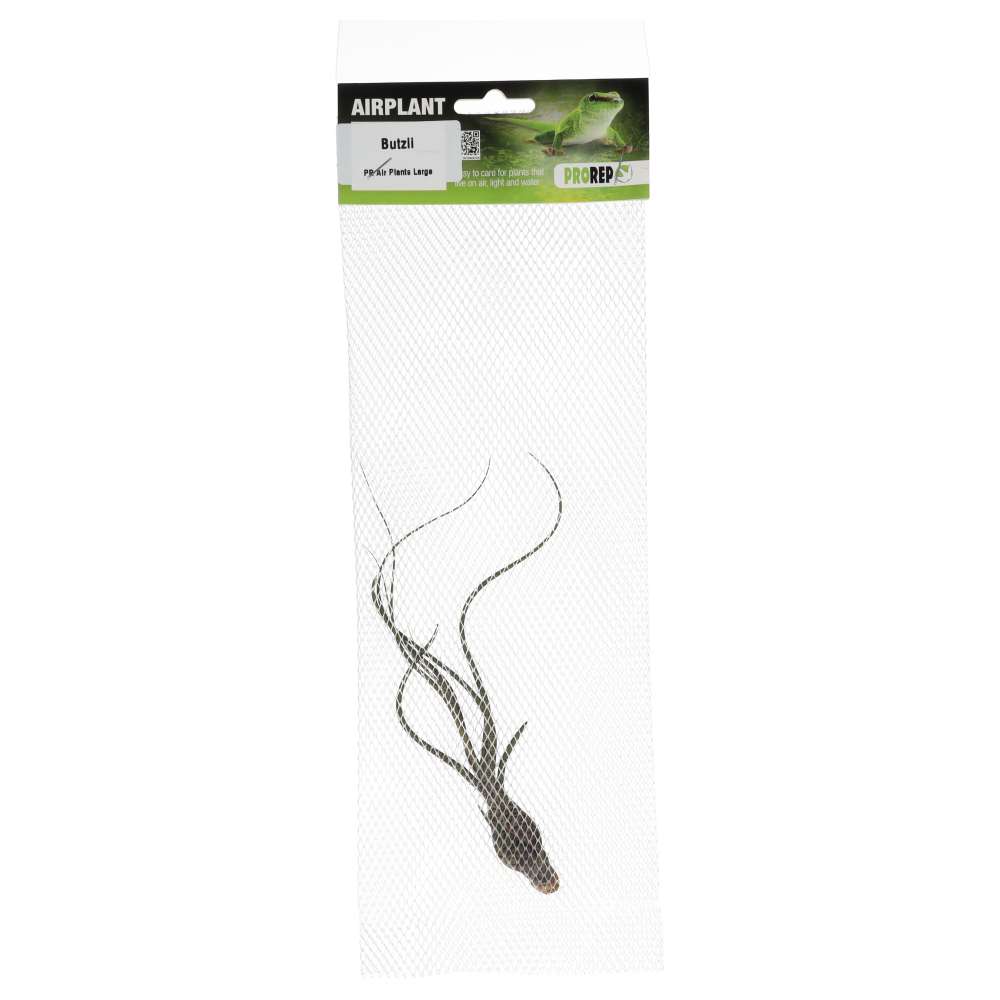
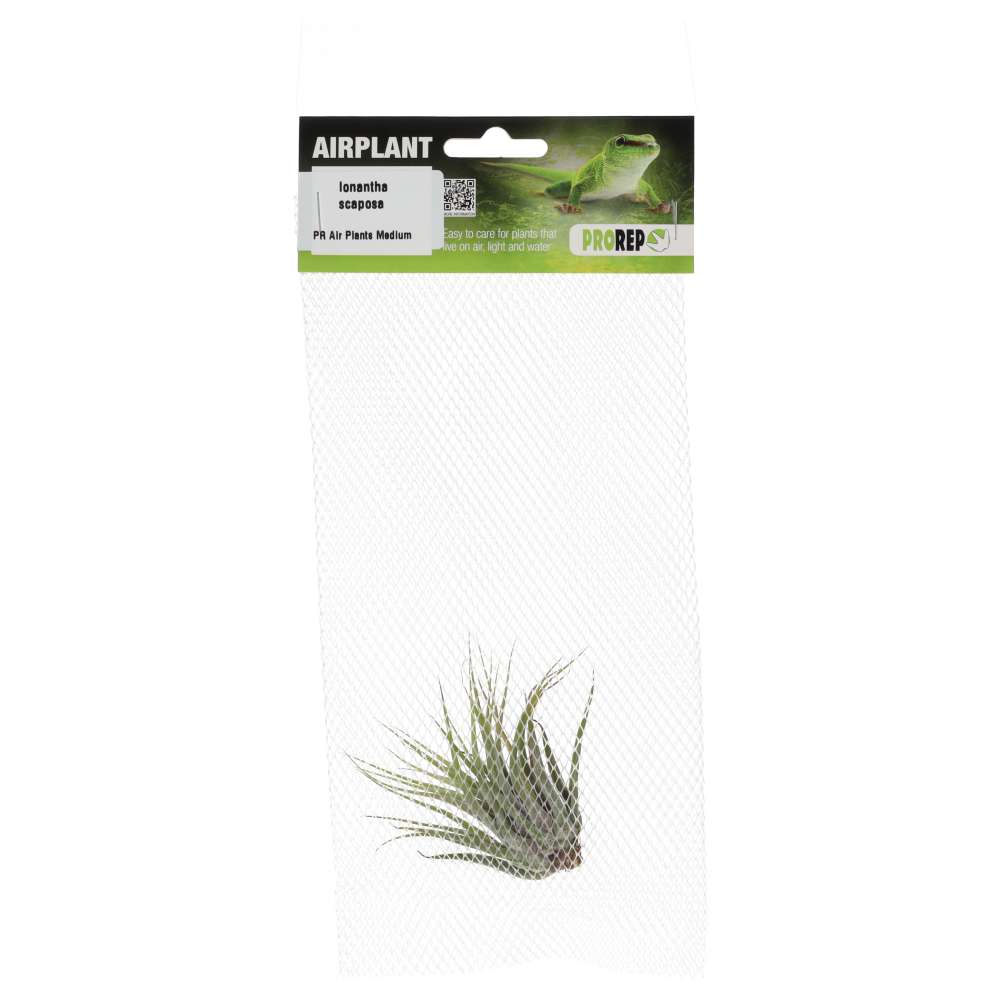
Tillandsia juncea Mature Appearance: Thin, grass‐like leaves growing from a narrow, woody stem. Can reach 30–45 cm tall when blooming. Overall form resembles a miniature bamboo or rush plant; self-supporting rather than rosette. Flowers: tubular, yellow or violet, emerging from the stem tips. Life Cycle: Blooming: May bloom in its 2nd–3rd year; flower spikes can be 15–20 cm tall. Pups: Produces pups along the lower stem; pups can be removed when ~5 cm tall or left to stay attached. Mother Decline: After pups establish, the main stem gradually deteriorates but pups continue growth. Enclosure Use: Best Fit: Tall, vertical spaces in arboreal enclosures for snakes (e.g., green tree python), larger geckos, or flying lizards. Can be tied vertically to a branch or left free‐standing in a tall background. In paludariums, can extend upward from shallow water margins, providing perches. Care: Light: Bright indirect to some direct morning light (250–500 µmol·m⁻²·s⁻¹). Water: Mist 3×/week; soak 15 min biweekly. Airflow: Good ventilation prevents rot at the base of the stem. Temps: 18–28 °C; avoid temperatures 30 °C, which can lead to fungal issues. Fertilizer: Optional: use a bromeliad or tillandsia‐specific foliar fertilizer at ¼ strength once a month during active growth. Rinse thoroughly after to prevent residue. Mounting & Display: Attach using fishing line, thin wire, or high‐temp silicone to cork bark, rock, or driftwood. Do not use glue that can leach toxins. Position so water does not pool in leaf rosettes—provide an angle or slight tilt to assist drainage. By integrating these air plant species into your reptile vivaria, you create a more natural, three‐dimensional environment—offering climbing surfaces, humidity buffering, and visual interest—while providing minimal maintenance needs. Proper placement, regular but moderate watering, and good airflow will ensure your Tillandsias thrive alongside your reptiles.